Tuesday, 18 April 2017

Psychology of Eating Podcast: Episode #201 – The Brilliance of Having a Sensitive Body

In this session, Marc, founder of the Institute for the Psychology of Eating, and Sandra take a deeper look into what she describes as low energy and inability to focus and get things done. As the discussion unfolds, we learn that she is an overall sensitive soul, and Marc gives her a new way of recognizing what this means when it comes to her energy, and her desire to “fix” things. Sandra, at 40 years of age, comes away with a new perspective around honoring her sensitivity, as well as practices to allow herself to take a step back before trying to rush in, plan, and then end up getting overwhelmed. Marc even invites her to have chocolate every day!


Below is a transcript of this podcast episode:

Marc: Welcome, everyone, I’m Marc David, founder of the Institute for the Psychology of Eating. We’re back in the Psychology of Eating Podcast. And I’m with Sandra today. Welcome, Sandra!

Sandra: Hello, Marc!

Marc: I’m so glad you’re here. And let me just say a couple of words to viewers and listeners. In case you’re new out there, here’s how this works. Sandra and I are officially meeting for the first time right now. And we’re going to spend less than an hour together and do the best we can to move you forward, young lady, and see if we can help in whatever challenge you’re looking for. So if you could wave your magic wand, and get whatever you wanted from our time together, what would that look like for you?

Sandra: I think I would like to have more energy or maybe I could balance my energy better. I have the feeling I waste a lot of energy and spend it maybe in the wrong places. And I have a lot of plans and a lot of ideas and a lot on my plate. And sometimes I don’t know how to make it all.

Marc: Mmm hmm. So when you find yourself not managing your energy well, what might that look like? Like, what would be a way that, “Oh, I can manage my energy better than this?”

Sandra: Sometimes, I get overwhelmed. Then, I don’t know where to start. And then, I get easily distracted. I don’t do what I have planned. I get lost on the Internet or I eat too much. And yes, it’s hard to describe. Yes, it’s sometimes too much I want to do at once. And then, it all falls apart.

Marc: Mmm hmm. So how often does unwanted eating come into the picture for you?

Sandra: It’s mostly in the evening after a stressful day. It’s like calming me down. Or I try to yes, after the hard day to treat myself and get rid of all the tension and the stress. And sometimes it’s at lunchtime or after lunchtime. But mostly, it’s in the evening.

Marc: Mmm hmm. And how many days a week does that happen for you would you say?

Sandra: I think four or five days a week.

Marc: Mmm hmm. So do you reach for any particular foods?

Sandra: Chocolate. I do the healthy dark one. But it still has enough sugar, I think.

Marc: Mmm hmm. So chocolate. Now, are you concerned about your weight?

Sandra: Not really. My weight goes up and down. But I think my body has a wisdom. And I’m not really concerned about weight. I always love to lose some weight. But I’m okay with the body I have. So it’s five pounds or so. But it’s not the priority. I’m more concerned about overeating. And I don’t know, I feel like I’m not myself. And I don’t have the energy for the things I want to do by overeating because my body requires the energy for digesting, I think.

Marc: Sure. Sure. Sure. Sure. Yeah, that makes total sense. So at night after you’ve eaten or you’ve overeaten, what’s usually the feeling afterwards? How would you describe what you’re feeling?

Sandra: It depends on how much it was. And if it was very much, then I feel guilty. And I’m disappointed about myself. And I feel full and yes, but like paralyzed, sometimes not able to do something, but rest. Yes, disappointed about myself often.

Marc: Okay, so that’s a good, juicy answer. So I asked you, at night, after you overeat, how might you be feeling? You said—let me just repeat this back to make sure I got this right—you said that well, depending on how much, if I ate a lot, I could feel guilty, I could feel disappointed in myself. And all of a sudden, I’m tired. And all I could do is rest and not do anything because I got all this food in my system. So does that describe what you said?

Sandra: Yes, pretty much.

Marc: Okay. When was the first time you remembered having a relationship with food that felt a little challenging?

Sandra: Very early in life.

Marc: Yeah, how old were you?

Sandra: I think about 10 or 12, I started my first diet.

Marc: Mmm hmm. What do you think, in your opinion, made you start that first diet?

Sandra: I always felt that I was, I was not really fat. But I felt not good looking. My mother was very slim and skinny and so was my sister. And I was always jealous. And I wanted to be more like them.

Marc: Mmm hmm. So you started dieting. And did anybody know you were dieting?

Sandra: Yes. My parents noticed. And but it was okay. It got worse when I got older. Then, it got severe.

Marc: Mmm hmm. Do you live alone or are you in a relationship?

Sandra: I am divorced. I was married for six years. And we separated about eight years ago. And yes, I’m divorced for four years now. And currently, I don’t have a partner.

Marc: Are you dating or have you had a significant other in between this time?

Sandra: Yes, I had a boyfriend. And I ended the relationship this year, a couple of months ago, because it was very difficult and challenging. And yes, I have the feeling, I’m just not good at relationships.

Marc: Mmm hmm.

Sandra: And now, I want to improve the relationship with myself. I want to work on myself. And I think I have some work to do. And yes, a relationship is the most challenging, most difficult part of my life, I think. And now, I have other priorities: my work, my son, and the training. I’m not saying, I don’t want to have a boyfriend ever again, but not at this time.

Marc: So are there times during the week or the month where you notice your eating is much better and you’re not overeating in the evening and things are not as bad as they might usually be?

Sandra: Yes. Yes, there are times.

Marc: What characterizes those times? Are they predictable in any way? Do you notice anything about them?

Sandra: Yes, I’m doing Aikido. This is a martial art. And I really love that. And when I do this, it gives me a lot of energy. And I don’t have the urge to eat so much when I do this. And yes, if I do something that I really like or appreciate or spending time with my son, yes, things that I really like, yes, or watching a movie, it’s when I’m more relaxed because eating, eating too much is pretty much related to stress, I noticed.

Marc: Yes. Yes. Yes. Yes. Mmm hmm. That makes sense. So are you doing most of the parenting?

Sandra: I do a lot. But my ex-husband also takes care. And my son is regularly at his place. I do a bit more, yes. But we get along very well. And we’re friends. And it’s important. Our son is the most important thing. So we are really exchanging important issues. And yes, that works well.

Marc: Yeah. So when you eat at night, you mentioned chocolate. Are there any other foods that you go for?

Sandra: Are there any others? Sometimes nuts or…What else? I really prefer the chocolate. Sometimes it’s some healthy bars with dates, sweet stuff. I’m pretty strict with my eating because I have a lot of food sensitivities. And I have a sensitive digestion. So I try to move in my allowed places.

Marc: Sure. Sure. Sure. Sure.

Sandra: Yes. Sometimes, it’s some nut butters, almond butter, or yeah, some smooth stuff. And mostly, I let the chocolate melt in my mouth. Yes.

Marc: So here’s another question that’s off the topic we’re talking about right now. If you look back on your life, what would you say…How would you complete this sentence? One thing that I’m particularly disappointed in about life is __________. Like, a particular disappointment that stands out for you.

Sandra: Particular disappointment is the work that I’m doing that I couldn’t do what I would have liked to.

Marc: Mmm hmm. So disappointment around work.

Sandra: Yes.

Marc: Yeah.

Sandra: Yes. I don’t really like the job that I’m doing. It’s a safe job. I can do a living for me and my son. And yes, I get enough money from it. But I don’t really like what I do. And I would like to do something else. And yes, it’s exhausting.

Marc: Mmm hmm. Mmm hmm.

Sandra: Yes. And I’m afraid to leave it because of the security.

Marc: Sure, that makes total sense. It makes total sense.

Okay, so, Sandra, I’ve got some thoughts that I would love to share with you. I may ask some more questions. But I’ve got some good information to get going in our conversation. You started out answering my question. I asked if you could wave your magic wand, what would you get out of this session. So the first thing you mentioned is you would want more energy, and then maybe manage the energy you have better. And you said, “You know, I don’t know that I manage my energy so well.”

And then, we talked about eating at night and how that happens. And that can send you into a lot of guilt. And it could definitely drain your energy and set you back. And you understand why you’re doing it. It’s like a stress reduction. It makes you feel better at the end of the day. It’s totally understandable.

So I want to do something a little different with you. I want to give you a different context or interpretation of your experience. So you experience your life in a certain way because it’s you. And it’s your life. And you experience it. And you decide certain things about it, which makes sense because you’re the expert on your life. I’m the expert on mine.

And sometimes, we don’t see clearly. Sometimes, we do. So here’s what I want to say. I want to put some different words around your story. And we’ll see if this is helpful.

So when you say, “I want more energy or I want to learn how to manage the energy I have better,” what I see comes before that is that my guess is you’re a very sensitive soul.

Sandra: Yes.

Marc: You’re a sensitive soul. You have a sensitive body. And unfortunately, what I think happens in this world is we don’t distinguish and appreciate the sensitive souls. We don’t really understand it. It’s a different species of people. There are some humans that are very hard. You can throw them into all kinds of environments and toxins and stresses, and they just handle it better. They’re bodies’ a little stronger. And they deal with it better. They’re not necessarily better than a sensitive soul. A sensitive soul is not worse than them. It’s just different.

So what happens is…And when I said you’re a sensitive soul, you shook your head. You agreed with me. So you’re going to be experiencing a different set of conditions in life, compared to the average person. So I want to see you through that lens. And I want you to see you through that lens. So sensitive souls have more of a reactive body, meaning the body will react to things that don’t serve it or that the body doesn’t like or that irritate the body.

On one level, all that is is body intelligence. It’s your body saying, “This ain’t good for me. This does feel good. This doesn’t feel good.” So then, you know very specifically, “Oh, this feels good. This doesn’t.” So sensitivity is actually a form of intelligence. It’s the body and the world and our experience giving us feedback and saying, “Okay, this, this…Something’s not working here. Oh, this food doesn’t work, let me make and adjustment. Oh, this environment’s not working. I’ve got to just figure something out here.”

So you will probably, from now until forever, be managing your experience with the world based on that sensitivity. So I’m saying this because I would love for you to be able to honor that part of you a little more and respect it a little more and to notice any places where you may see that part of you, as somehow less than or deficient because you don’t have a lot of room to A) be sensitive and react to something in your environment, and then B) to get down on yourself for doing that and then get upset with yourself for trying to compensate in ways that don’t work well. So to get upset at yourself for trying your best to navigate a sensitive body and a sensitive soul, you have to have more compassion.

Sandra: With myself?

Marc: Yes. Otherwise, you’re beating yourself up.

Sandra: Yes.

Marc: And beating yourself up is the opposite of what you want to do. You’re constantly trying to protect your body from getting beat up by food or by the environment or your emotions from getting hurt by the environment. So it makes no sense to self-attack. So what I’m saying is that’s where you have to get exquisitely better and better and better at respecting your own sensitivity, looking at it as a companion—it’s a companion—and understanding that you need to honor it and respect it and respond to it, as opposed to think it makes me less than or I have to fix this. Do you see the difference?

Sandra: Yes. Yes.

Marc: One is a more empowering way to look at your circumstance. The other is a disempowering way. Both ways have you noticing the condition or the experience. But one way is elevating you. And the other way brings you down. It’s no different than you look at your son. You look at what his proclivities are or what he’s interested in. What his talents or skills are. Yeah, you see the places where maybe he could learn more. But we’re always looking to see what’s their talents? And how could we support them? And if he has a special need or a special condition, then you work with that and you love him. You don’t attack him because you’re sensitive to a food or a kid at school. Right?

Sandra: Mmm hmm.

Marc: So I really need you to be your best friend in this regard.

Sandra: Yes.

Marc: See where I’m going?

Sandra: Yes.

Marc: A lot of your energy gets wasted, I think, trying to fix something.

Sandra: Yes.

Marc: And I really think that when you get that you don’t have to fix this, that you just have to live into it with more compassion, then it’ll still have challenges. You’ll still have challenges. Things will still be difficult. You’ll still be sensitive. But you’ll use that information in a different way. So you come home. And at night, you’re turning to chocolate to feel better and to stress relief.

So here’s what I want to say about that. I want to give you a different story around that. Part of your story, I believe, based on what I’m hearing from you is, “Hey, this is not a good behavior. It’s like I do this.” I asked you what happens afterwards? How do you feel? You go, “Wow! If I eat too much, I feel very guilty. And I feel disappointed in myself. And I have no energy. And I need to just like do nothing and relax.”

So one of the reasons you’re going to chocolate is because you’re trying to regulate a life that challenges you. You have, I think—correct me if I’m wrong—but you’re the kind of person that doesn’t have an easy time being alive on planet Earth.

Sandra: No.

Marc: It’s not easy for you. I get that about you. Some people, honestly, Sandra, it’s just harder for. And I have all the compassion in the world for them. It’s just harder. Some people it’s easier. Some people are somewhere on the continuum. But it’s hard for you. And I think, because your nervous system is very sensitive, when you say, “Oh, you know, I need more energy to focus on things. I start something. I don’t complete it. I get distracted,” a part of that is your nervous system isn’t strong. It doesn’t know how to function well in this world. You get easily thrown off. It’s just you’re easily distracted. Your nervous system has a hard time focusing because stimuli distract you. And especially, negative things are going to grab your attention. Things that are wrong in the environment. Negative feelings will tend to capture your attention is what I get, as well.

So I want to acknowledge that it’s hard for you, so turning to chocolate at night makes perfect sense. That is arguably the most harmless strategy you could have chosen to self-medicate.

Sandra: Yes. And it’s such—

Marc: Of all the strategies to do, you could do drugs, you could do alcohol, you could do a lot of stupid things—of all the strategies, that’s probably one of the best. Eating a bunch of dark, healthy chocolate, even if it’s too much or eating some nuts, in the scheme of things, it’s okay. It’s not affecting your weight in a dramatic way—

Sandra: No.

Marc: nor is it probably affecting your health in a dramatic way. What it affects is your…It affects your self-esteem. And it also affects your sense of like, “Hey, I want to be moving forward here. I want to be getting better at this. But I’m not.” So you get disappointed.

So what I want to also suggest to you is the feelings that come up for you, I want you to try this on. The feelings that come up for you, after you eat too much chocolate at night, are the feelings that are there anyway. They’re kind of there. And I could get in there somehow and see the feelings that are there. Even when you haven’t eaten any chocolate, I suspect that somewhere in there, there’s this feeling of, “I’m disappointed. I’m guilty about me, life. And I’m tired.”

Sandra: Mmm hmm. Yes.

Marc: And when we’re tired, the only thing you can do is rest, really. You can push through it. But that is awful. It’s hard to push through being tired. You’re probably not great at pushing through. When you’re tired, you really feel it. It would probably affect your mood in a big way. You could probably do it. But it doesn’t benefit you in a big way.

So what I’m saying is, for you, the chocolate makes sense. It makes perfect sense. It’s a reasonable strategy. And I want you to try to put a different context on it. I want you to look at it not as a terrible thing. And what I would like you to do is to plan on eating chocolate every night, to actually plan it,–

Sandra: Okay.

Marc: It’s to say, “I am going to do this. I am choosing to do this. Why? Because it actually works for me. It can work for me. I do it anyway. I do it anyway.” So now, I want you to choose the thing that you’re doing because it gives you a benefit. So I want you to learn how to experience the benefit, to actually experience the actual benefit that it is giving you. The actual benefit that it gives you. It gives you some pleasure. It gives you some fulfillment. It gives you gratification. It gives you stress relief. It helps you get in touch with your feelings. It helps you get in touch with, “Geez, I’m a little tired.” Because I just get from you that a part of you is just a little tired.

Sandra: Yes.

Marc: And you don’t even have to have a reason. You don’t have to justify it. You don’t need a reason to be tired. You don’t need to justify it. You’re a little tired. And a part of you is a little disappointed, and in life maybe, in yourself maybe, a little guilty in yourself maybe, perfectly natural. So I would almost want you to, when you start to drop into those emotions at night, to start to hold yourself there more, as opposed to get away from it or feel bad that you’re creating that, because what’s happening on a certain level is you’re actually dropping into yourself.

Sandra: Okay.

Marc: You’re actually using the food at night to help you drop into an experience, which you need, which is intimacy with yourself. Right now, you need more intimacy with yourself. You’re learning how to be in a relationship with you. You’re learning how to treat you better. One of the ways you treat you better is by being in contact with you. So at night, that’s your first time, probably during the day, to just be really in contact with yourself. When you’re eating chocolate, that’s your time.

Sandra: Yes.

Marc: Right. So you’re being with you. You’re being, just it’s you. It’s just you and whatever experience you’re creating. And the experience you create is an intimate one with this substance. This stuff that makes you feel really good. It gives you pleasure. It gives you stress reduction. It makes you feel good about yourself temporarily and gets you in touch with some emotions that are under there, which is guilt and disappointment, and the feeling of being tired. And the tired, in part, is physical. But it’s also, it feels like an emotional tired. It feels like a little bit of a soul tired.

Sandra: Yes.

Marc: And it’s fine for you to acknowledge, “I’m tired.”

Sandra: Yes.

Marc: So before you have more energy, you have to be tired.

Sandra: That makes sense.

Marc: I think you have to hang a little bit more in being in the experience that you’re in, which is fundamentally, there’s a part of you that’s a little exhausted. That’s a little tired. That doesn’t appreciate the grind. You’re not getting fed being in a job that’s not totally in alignment with who you are. Even though, it gives you the money, it’s hard for you because you’re a sensitive soul. So right now, you’re hitting a point…How old are you?

Sandra: I’m 40.

Marc: Forty. Yeah, so 40’s a powerful transition point. And it’s a time when we really have to reckon with ourselves. We really have to see ourselves clearly and own who you are. So it’s learning how to do relationship with you well—you’ve said that—but doing relationship with you well, means you accepting you for who you are. That’s the secret. Don’t try to make your son be someone he’s not. If he’s an athlete, let him be an athlete. If he’s into cars, let him be into cars. If he’s into math, let him be into math. If he doesn’t like dancing, don’t force him to dance. So let yourself be who you are. And who you are is very different. It’s a little different.

Sandra: Yes, it’s true.

Marc: It’s more sensitive. And you’re just a sensitive soul. So you have to learn how to embrace yourself there. You have to learn how to love you a little bit more there and hold yourself a little more there, as opposed to what’s happening right now is you’re still resisting that part of yourself. And now that you’re 40, what I’m saying to you—this is very important—if you take away nothing else from this conversation, now that you’re 40, now that you’re at that point in your life, you must embrace this part of you. I mean embrace it to the point where you love it, you honor it, and respect it. And you see it as your power, not as your deficiency, not as your weakness.

I can identify this in you because I’m the same way. So I’m a sensitive soul, too. But I learned, I learned how to work with that, plain and simple. I live out in the country. I don’t like living in the city. It doesn’t work well for me. It will completely decrease my efficiency as a person, as a human being. You would not like me if I lived in the city. I wouldn’t like me if I lived in the city. So I learned certain things help regulate me. Environment regulates me. Certain kinds of people help regulate me better. Certain foods help regulate me better. Certain ways of being with myself help regulate me better.

Sandra: Yes. Yes. Yes.

Marc: So that’s what I’m asking you to do. But it requires that you stop trying to fix this part of you or avoid it. And you fully embrace it. And you start to see. You ask yourself the question. You say, “Sandra, how is me being a sensitive soul, how is that a gift? How is that a gift? How is that a grace?” How is that a gift? Tell me.

Sandra: I sense a lot of things. I’m a good listener. I can listen. And people like to be around me. And they like to tell me their stories. And they just know that I’m very understanding. And other people appreciate my sensitivity. Yes. And how is it a gift? Yes, I’m very aware of myself, of other people, of their feelings.

And yes, sometimes, it’s a gift. But sometimes, it’s hard. And sometimes it’s hard for me to—how to express that—to set borders. And I notice that I need a lot of “me” time. I really love to be alone, not always. But when I’m among people, and there’s a lot of different energies, I feel, I have to spend time with myself and recharge myself. You know what I mean? Yes. And I–

Marc: So that’s the answer to how you have more energy. How you have more energy is you just honoring how you work. This is how you work. You just said, “You know, wow, I need to recharge my batteries. I need to be alone. Alone time helps me.” So it’s respecting that and saying that’s just how you work. There’s no guilt. You don’t have to justify it. You just have to do it. You just have to say, “Given my life and my lifestyle, and given my responsibilities, how do I get some alone time? How do I recharge?” But it’s learning to respect that part of you.

That’s what I’m saying, to really own it and respect it as if it’s your power. Because when I asked you, “You know, how does it benefit you?” You said some amazing things. It makes you who you are. It gives you your superpowers. People feel good about you. When they’re around you, they can feel seen. They can feel understood. You can track people. You can feel their emotions. You could feel what’s going on in your own self. And yeah, you identified. And it can be hard, for sure. Absolutely. It could absolutely be hard. So that’s the package deal. That’s what you have to learn how to live with.

So let’s go back to the chocolate. I want you to plan on having chocolate every night.

Sandra: Okay.

Marc: I want you to plan on having chocolate every night. And what I would like you to consider, consider, is plan on how much you’re going to have.

Sandra: Okay.

Marc: Now, I don’t want you to undershoot it too much and deny yourself. I want you to pick an amount that you feel, “You know something, I think this can satisfy me.”

Sandra: Okay.

Marc: And then, do what you always do, which is you say you eat it slow and you enjoy it. Then, you do that. And you conscientiously say to yourself, “I’m doing this to feel good. I’m doing this because I’ve had a stressful day. I’m doing this because this gives me a certain kind of pleasure that right now nothing else gives me. And this helps me. And dark chocolate’s not going to hurt me.” It’s probably not. As these things go, that’s a pretty safe bet. And if you take care of yourself in other ways, you’ll be fine.

So you’re choosing. You’re choosing to do the thing you’re going to do anyway. You’re honoring the experience. You’re enjoying it. And over time, what will happen is, is it will strengthen your ability to enjoy the thing you’re doing or to choose not to do it, if you don’t want to do it because you’re embracing it first. And you’re seeing the brilliant reason for it. There’s a brilliant reason why you’re doing it that makes sense. So we’re just looking to honor that.

Sandra: Yes. Yes, something else just came to my mind. Is it okay to say this?

Marc: Yeah. Please. Yeah. Yeah. Yeah.

Sandra: I’m very excited about learning and educate myself in this whole psychology and eating and healthy nutrition stuff. And then, sometimes, I get overexcited. And I binge watch videos and podcast and information. So maybe it’s an overload. And yes, with eating too much chocolate, this maybe is a reflection. I don’t know.

Marc: Again, let’s look at why it would make sense. There’s the part of us humans that we like sensory experience. We have sight. We have hearing. We have touch. We have taste. All the senses are here to be fulfilled. So the eyes want to see and the ears want to hear. The voice wants to speak. The skin wants to feel. Taste buds want to taste. It’s as simple as that. We are built for sensation. So the body hungers for sensation. Every human, from the smallest child, as soon as they can contact their senses, like kids are like amazed by their own body and their own little experience because it’s all new to them.

So you are having an experience when you’re binge watching, let’s say, and eating, you’re creating a multi-sensory experience for yourself. It’s like being at the movies and eating lots of popcorn. It’s this full-bodied experience of the visuals. The feelings you get inside. The food in your mouth maybe being excited. And when you’re chewing it, it actually can accentuate the excitement. But then, it could also contain our level of excitement so it doesn’t get to it.

So it’s a sensory experience. So I’m always wanting you to see the brilliant reason first, where it makes sense. I want your mind to see why this experience makes perfect sense. Why it’s not wrong. As soon as you make it wrong, you will go into, “There’s something wrong with me. I’m deficient. I can’t stop this. I need to fix this. What’s my problem?” You go down the wrong road when we think the behavior’s wrong. You might not want to do the behavior. That’s fine. It’s fine for you to say to me, “Marc, you know, when I watch videos, I don’t want to be eating. I don’t like that behavior.” I go, “Okay, that’s a different story. But first, let’s understand why the behavior is there. Let’s understand why it makes sense. Let’s even maybe have a few times where you could actually enjoy the experience—

Sandra: That’s true.

Marc: and go, “Okay, here’s that experience. Let me just enjoy it once or twice so I could see what it’s like.” Once you do that, you have more power to say, “Ah! Huh, do I want to eat while I’m watching this video? Do I want to eat in any given moment? Is that what I want to do?” We develop our choosing muscle when we choose to do the very thing we’re going to do anyway. It strengthens our choosing muscle in both directions.

Sandra: Okay.

Marc: So that’s a practice. It’s a practice in always you’re seeing yourself from a higher perspective. Even though the behavior might be something you’re going to want to choose not to do, you have to recognize the wisdom in it first.

Sandra: Yes. Yes.

Marc: Make sense?

Sandra: Yes, it makes sense. And I think it stops the fighting.

Marc: Yes. Exactly.

Sandra: And this is still a strong part of me that wants to fight this behavior.

Marc: And that drains your energy. That’s what drains you. It’s the fight that drains your energy. And if you’re a sensitive soul to begin with, self-attack and self-fighting really drains your energy.

Sandra: It does.

Marc: It really drains your energy because you’re busy trying to deal with the world with the way the world can give us stimuli that we don’t like. Now, you have to defend yourself against your own self. That’s not fun. That’s the last person you’d want on the other team. So yeah, we’re letting go of the fight. When you let go of the fight, you’ll have more energy. And at the same time, it’s okay to be tired. Part of what you’re tired of is you’re tired of the fight and the struggle.

Sandra: Probably.

Marc: That’s a big piece of what’s tiring you is the very fight and the struggle. You think the fight and the struggle is what’s going to get you out of the tiredness and out of the disappointment and out of the guilt and into a better place. No, the fight only makes it worse.

So that would be a huge shift for you to make. But that’s the shift I’m asking you to make. And you can make that shift. I would not ask a 21-year-old to make that shift. They’re not ready. You as a 40-year-old are ready for that kind of transition, for that kind of evolution because you’re wise enough and you have enough years on the planet to understand and to see the results that fighting yourself has not gotten you where you want to go.

Sandra: No.

Marc: Which either means you have to fight yourself harder and beat yourself up more. And trust me, that doesn’t work. It doesn’t work. So then, we have to call a cease fire. So the things I’ve been asking you to do, another way of saying what I’ve been asking you to do is stop the fighting. Stop making things wrong. Stop finding the enemy in these behaviors. Start to make them your friends. See the wisdom in it. See the beauty in it. See the brilliant reason behind it first.

And then, what I’m suggesting is that’s going to help you eliminate the fight. It’s going to give you a little more energy. It’s going to give you more of you back. It’s going to make you more grounded. And it’s going to take you out of the stress response. Fighting yourself is just going to make you crazy. It’s not going to work for you.

Sandra: Yes. True.

Marc: So then, what this stage of life is also about for you is for noticing when you’re fighting yourself and starting to catch yourself. Have a little alarm inside the head that goes off when you’re fighting yourself. A little alarm that goes off, “Ding. Ding. Ding. I’m fighting myself.” Deep breaths. Two or three deep breaths. Pause. “Does this help me? Does this get me where I want to go?” Ask the question. So you introduce consciousness into the place where you normally go unconscious. Fighting yourself is an unconscious act.

Sandra: Yes.

Marc: Harming another human being is an unconscious act. Harming self is an unconscious act. A part of us must go to sleep. It is not a natural act. So defending oneself is natural. Harming oneself for not a good reason, not natural. So you’re learning to change that behavior. In order to change that behavior, you have to train yourself to stay awake a little bit more when you do the behavior.

Catch yourself, “Oh, my God, I’ve been fighting myself for the last 10 minutes. So we’re shortening the amount of time that you spend in self-attack. So if you spend…I’ll just make up a number. If you spend an hour there every day, we want to shorten it to a half hour. And then, we shorten it down to 20 minutes. Then, we shorten it down to 10. So we gradually shorten the amount of time where you’re self-attacking or self-hating or not loving yourself or feeling guilty.

So that’s the targets we’re shooting for. How you doing? Do you have thoughts, questions?

Sandra: I think it’s a good idea to become aware when I’m fighting myself. It’s because maybe I’m often unconscious about that part. You said some time ago, I’m in a transition time. And that’s true because I would like to go, get out of my job and do something different. And this is really challenging. And yes, it requires a lot of courage and also energy. And yes, and it’s also my age. I think, if I don’t do it now, maybe I will not be confident to do it later. So yeah, that’s a big part in my life right now to do this transition.

Marc: So to do the transition, you need to be on your own side.

Sandra: Yes. Yes, it’s true—

Marc: Right.

Sandra: and not fight myself.

Marc: Yeah.

Sandra: Yes, that makes total sense. And yes, I’m the person, I’m very left brained. I’m rational and logic. And yes, very often, I push through. And I don’t appreciate this sensitive part of me. I think I suppressed it a lot of times. And that make me tired and exhausted. Yes, I think that’s an explanation.

Marc: And it comes out at night for you when you’re finally quiet and alone and you don’t have responsibilities and you could be with yourself. That’s when it comes out. And that’s the person you want to care for. You just want to care for her. You don’t have to have answers. You don’t have to know, “Okay, here’s exactly when it’s all going to be okay.” You just have to love that part of you like you love your kid. You don’t tell your kid, “Okay, well, I’m going to love you more when you’re like taller or shorter or you gain weight or lose weight or whatever.” You probably don’t say that to your son,–

Sandra: No.

Marc: nor should you say it to yourself, nor should you be making your own love for yourself conditional. That’s going to give you more of you back. To deal with a powerful life transition, you need more of you available. So part of your work is to empower yourself more. This is the part of the work, not easy, but it’s a practice.

Sandra: Yes.

Marc: So how are you feeling? You feeling…Yeah, give me some words that describe you right now.

Sandra: Yes, I feel a bit overwhelmed. And I realized that I am, for a long time, I have been really hard on myself. And it’s, yes, it’s not so easy to let it go because behavior, it’s one thing to acknowledge it. And yes, the other thing to change it. And yes, I’m a person, if I could, I would change it right now. And I think, “Okay, Marc said this to me. And it made sense. And now, I’m going to change it at once.” And maybe it’s a good thing to observe myself—

Marc: Exactly.

Sandra: better and to become more aware when I’m in that place of self-judgment and be hard on myself. And yes, that’s a good practice—

Marc: Yes, well said.

Sandra: to be kinder.

Marc: Yes.

Sandra: Yes.

Marc: That’s something you must do to move forward into the future. You have to do it. And it’s a practice. And it’s not going to happen overnight, but give it spaciousness, give it time. And even the overwhelm, I think what happens for you is sometimes overwhelm might be a little bit of a default place that you go to. And overwhelm—I’m just going to leave you with this—it’s a…For you, I think what happens is you get excited. And your mind wants to figure it out. And you want an outcome. So you’re excited. Your mind wants to figure it out. You want the good outcome. But because the mind can figure it out, it cannot figure out how to do all of this quickly, but you are excited about it, the way you end up translating that in your system is, “Oh, my God, I’m in overwhelm.”

So this is what I’ve been thinking, in this whole conversation, is you often interpret your experience in a way that doesn’t fully honor and serve you. So what I’m saying is you’re probably less in overwhelm. You’re more in a little bit of excitement.

And you’re in a little bit of, “I want to fix this fast. But I can’t.” So then, your default place is, “Oh, well, I’m overwhelmed.” And I’m asking you to pause there and say you don’t have to…Like, after we get off this conversation, I would even spend some time trying to not even think. I would spend some time not even thinking and just notice how you feel, and not try to figure anything out, and not try to create a plan. Okay.

Sandra: Mmm hmm.

Marc: Wait a few hours before you do that–

Sandra: Mmm hmm. Yeah.

Marc: because sometimes you just have to let your nervous system take things in without assessing them, without having to fix them, change them, do something to it, just marinate a little bit, absorb, digest a little bit. Make sense?

Sandra: Totally. Yes, that would be a typical reaction to make a plan, and to notice, and to yes, to say, “Yes, I do this tomorrow.” And yes, it would be a typical reaction for me. And probably it’s better to yes, to let it flow and just sit there maybe. And yes, like you said try to stop over thinking, over analyzing.

Marc: Yeah. Yeah. And just do some breathing and just be with yourself in a way where you could drop out of your head and more into your body. Yeah.

Sandra: Yes, sounds good.

Marc: Alright. I really appreciate you being open and sharing your journey and being real and being honest. And you’ve really hung in there in this conversation. So I thank you very, very much.

Sandra: I thank you. And yes, it was really profound. And yes, I’m really glad I had the opportunity to be here and to yes, to open myself because it’s not so typical for me. Usually, I’m more in the shadow.

Marc: I understand. I’m glad you made that choice, good for you. That’s a good sign.

Sandra: Okay. So the sign I move forward, I think.

Marc: Yes. Exactly. Exactly. So, Sandra, I’ve got all the confidence in you. I think you could do this. And you’re just embracing the beautiful, sensitive part of you and owning it as a part of your power and because it’s your power. And it’s a great thing. It’s a great thing.

So I’m going to say thank you to you, Sandra, and thank you to everybody who’s tuned in. Once again, I am Marc David. On behalf of the Psychology of Eating Podcast, always more to come, my friends. Take care!

The Institute for the Psychology of Eating
© Institute For The Psychology of Eating, All Rights Reserved, 2016

Get Your FREE Video Series

New Insights to Forever Transform Your Relationship with Food

P.S. If you haven’t had a chance to check out our FREE information-packed video series, The Dynamic Eating Psychology Breakthrough, you can sign up for it HERE. It’s a great way to get a better sense of the work we do here at the Institute for the Psychology of Eating. If you’re inspired by this work and want to learn about how you can become certified as an Eating Psychology Coach, please go HERE to learn more. And if you’re interested in working on your own personal relationship with food, check out our breakthrough 8-week program designed for the public, Transform Your Relationship with Food, HERE.


source http://psychologyofeating.com/psychology-of-eating-podcast-episode-201-the-brilliance-of-having-a-sensitive-body/

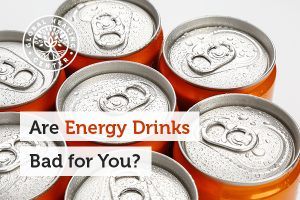
Are Energy Drinks Bad for You?

A table full of energy drinks. Discover why are energy drinks bad for you.

Energy drinks are popular among gamers, students, athletes, professionals, and anyone who has to drive overnight from Milwaukee to St. Louis. They’re big business, too. Americans spent $12.5 billion on energy drinks in 2012. Market experts predict that number to climb to $21.5 billion in 2017.[1] It’s clear that these drinks are only growing in popularity. With so many people guzzling them down every day, can energy drinks really be that bad? The short answer is yes.

Energy drinks can be devastating for your health. They contribute to heart problems, high blood pressure, obesity, diabetes, anxiety, insomnia, and a host of other health risks. In some rare cases, energy drinks have even proved fatal.

A Growing Public Health Concern

In 2011, 16-year-old Sara Milosevic went to a party where she consumed several pre-mixed alcoholic energy drinks. A few hours later she was vomiting violently. Other partygoers just assumed she couldn’t handle her alcohol. At 11 pm, the teen called her parents to come pick her up. By 3 am, Sara was dead. An autopsy revealed that her blood alcohol content was only .04—not even enough to be considered legally drunk. Sara’s father, a chemist, believes the energy drinks caused her death.[2, 3]

In 2011, mere days before Christmas, 14-year-old Anais Fournier suffered a fatal heart attack. In the 48 hours before her death, she consumed four energy drinks. In total, Anais consumed 480 mg of caffeine—less than one-tenth the official fatal dosage of the stimulant, but almost five times more than the recommended limit for adolescents. Doctors speculate that the energy drinks agitated a pre-existing genetic heart condition.[4]

It’s not just teens who are affected. In 2015, 28-year-old Martin Bowling suffered a heart attack after consuming eight energy drinks at a pub. Bowling was rushed to a hospital and survived. He had been spending $150 a week on energy drinks.

“I’d been drinking them for about seven years, and it was like I’d become addicted,” said Bowling. “Now I see those drinks as death in a can.”[5, 6]

Even popular athletes can succumb to the toxicity of energy drinks. In 2003, professional wrestler “Stone Cold” Steve Austin was hospitalized with severe heart palpitations. He believes that his then habit of consuming 3-5 energy drinks every day was a primary cause of the health crisis.

“I think I’m dying, dying for sure,” Austin recalls of the event. “My heart’s beating so hard it feels like it’s going to crack a rib jumping out of my chest. My heart might be doing 160 or 180 beats per minute. My legs are shaking and I can’t make them stop. I’m sure I’m having a heart attack.”[7]

Between 2004 and 2014, energy drinks have officially been a factor in at least 34 deaths.[8] Unofficially, perhaps many more. Caffeine deaths are often attributable to other factors and may be severely underreported and undiagnosed. Some doctors suspect that the actual number could be much higher.[9] Thousands of people have been hospitalized with symptoms of energy drink overdose, including insomnia, anxiety, convulsions, high blood pressure, heart attacks, and other cardiovascular complications. The wings that energy drinks give you might just come with a harp and halo.

How Your Body Reacts to Energy Drinks

We all need a little energy boost now and then, but there are healthier options. Energy drinks are a chemical cocktail of caffeine, refined sugar, and other ingredients. Some of which, like herbs and vitamins, may even sound healthy. What is it that makes energy drinks so dangerous?

One study looked at the effect that consuming just one 16-ounce can of a leading brand of energy drink had on basic, vital functions. The findings? Blood pressure jumped an average of 6.6 points within thirty minutes of consumption, and norepinephrine, a stress hormone, increased by 75%. Norepinephrine also enhances the production of cortisol, a fat-storing hormone, significantly increasing the risk of weight gain.[10]

Energy drink manufacturers maintain that their products are safe when consumed in recommended amounts. Do you know what the maximum recommended intake is? For most brands, it’s two or three cans per day. For some, it’s only one.

These warnings are easy to miss. Manufacturers usually hide them in small print on the back of the can with the other information that few people bother to read—that’s if the warning is on there at all. Make no mistake, beverage companies want you to drink as much of their product as possible.

There are two main health dangers of energy drinks—neurological and cardiological. In other words, your nervous system and your heart. These problems are caused by the very same ingredients that make you feel energized—staggeringly high levels of caffeine and sugar.

Energy Drinks Are High in Sugar

Energy drinks can contain up to 78 grams of sugar per serving. That’s 20 teaspoons of sugar every time you drink one.[11] Admittedly, that’s the high end of the scale, but these drinks average about 30 grams of sugar and 280 calories a can. That’s not health food. If staying trim is your goal, drinking just one energy drink makes your job 280 empty calories harder. That’s about 35 minutes of burpees.

Even if you work out enough to stave off diabetes and weight gain, sugar can still damage your health. Excess sugar is one of the leading contributors to heart disease. One study found that people who consumed 25% or more of their daily calories as sugar doubled their chances of dying from heart disease.[12]

Many companies have sugar or calorie-free versions of their product, but what are they using to replace sugar? Artificial sweeteners like aspartame may be even worse for your health. They can interfere with your gut biome, damage your metabolism, encourage obesity, and contribute to diabetes.[13, 14,15]

Energy Drinks Are a Source of Caffeine

Exact amounts vary, but the average energy drink contains about 70-100 mg of caffeine—about as much as a cup of coffee.[16] That doesn’t sound very dangerous, and to a healthy adult, it usually isn’t. Caffeine is toxic but generally safe in small amounts. The problem is the combination of caffeine and other stimulants in an energy drink, as well as lesser understood ingredients like taurine. This chemical cocktail can trigger existing health problems, including genetic disorders that you may not even know about yet.

This is likely what happened in the case of Anais Fournier. Anais had a heart condition called mitral valve prolapse, a relatively common condition that affects 1 in 20 Americans.[4] She consumed only two energy drinks in the 24 hours before her death. That doesn’t sound like much, but, when combined with her condition, it was enough to bring about tragic consequences.

Energy Drinks and Children

Fournier’s unfortunate case is unlikely to be the last. The use of energy drinks by young people is on the rise. Culture and media influence our diets in many ways, both directly and indirectly. Because of this, the youth are likely to see energy drinks as just sort of a cooler kind of soda. A 2014 study estimated that 68% of adolescents and 18% of children under 10-years-old consume energy drinks.[17]

While caffeine is safe in small amounts for healthy adults, it’s a proven health risk for children. Nearly 50% of the people who overdose on caffeine are under 19 years old.[18] Adolescents should limit themselves to no more than 100 mg of caffeine a day. Children age 4-6 should consume no more than 45 mg daily.[19] For children younger than that the number should be zero.

Unlike cigarettes and alcohol, there are usually no age restrictions when purchasing energy drinks in the U.S. Other countries have wised up. In Sweden, for example, most energy drinks can only be sold in pharmacies and selling to children is banned.[17] The World Health Organization (WHO) confirms that energy drinks have a “proven negative effect on children.”[17] The bottom line is simple—children should never consume energy drinks.

Energy Drinks and Alcohol

Eager for new profits, energy drink companies started marketing to the bar crowd in the early 2000’s. They urged bartenders to promote mixed alcohol and energy drinks. Sorry to be a buzzkill, but combining energy drinks with alcohol substantially increases the dangers of both. Caffeine is a stimulant, while alcohol is a depressant. Combining the two can imbalance your system.

One way this manifests is as a “delayed drunk” feeling. The stimulant masks some of the sensory cues on which you normally rely to determine your level of intoxication. In other words, you’re drunk, with the same loss of cognition and motor skills as usual, but you don’t quite realize it. This means that you will likely drink far more, and far faster than you normally would.

I know that some people might think this sounds like a pretty good thing. You get to party longer, right? Well, that’s what energy drink marketers want you to think.

Caffeine doesn’t change your actual blood alcohol level, just your perception of it. That means that as you drink more to hit your buzz, all the usual dangers of drinking are magnified. One study found that people who mixed alcohol and energy drinks were more than twice as likely to drive drunk and far more likely to be a passenger in a car with a drunk driver.[20] As you feel the need to drink more to feel the same high you’re used to, your risk of alcohol poisoning also increases. If all that isn’t enough, your hangover will be worse, too.[21]

A few years ago, energy drink companies were eager to capitalize on a potential new revenue stream. They started selling pre-mixed alcoholic energy drinks. The FDA warned consumers to avoid these dangerous drinks and sent warning letters to energy drink companies calling the concoctions a public health threat.[22] Pre-mixed alcoholic energy drinks quickly disappeared from U.S. store shelves soon after. That won’t stop you from ordering a mixed energy drink in a bar or mixing your own, but I strongly caution against it.

The Effect of Energy Drinks on Athletic Performance

Energy drinks remain popular among athletes for their supposed performance-enhancing effects. Some people don’t care about side effects as long as it provides results. Well, if the idea of a heart attack in the middle of a kickboxing match doesn’t deter you, maybe this will: energy drinks ruin long-term athletic performance.

Studies on the actual performance-enhancing effects have revealed mixed results. Some studies find a minor, short-term boost, while others have found no performance-enhancing effects at all.[23] The truth is that there’s no magic potion for winning inside those cans. Any perceived performance-enhancing effects come from the simple formula of caffeine plus carbs, and there are healthier ways to get those.

Our bodies quickly build up a tolerance to substances like caffeine and sugar, and prolonged overuse tends to have undesirable side effects. Caffeine reactions frequently include bowel instability, mood swings, and anxiety. With sugar, it’s weight gain and diabetes. Both can cause insomnia and other sleep disorders. A study published in the British Journal of Nutrition found that energy drinks significantly increased insomnia and anxiety in athletes.[24]

Aluminum: A Hidden Toxin

There’s another potential source of toxicity in energy drinks that you probably haven’t thought of—the can itself. Aluminum cans have been the standard beverage container for decades, but aluminum is toxic to the human body. Hopefully, no one is eating the can after consuming the beverage, but energy drinks are acidic, and trace amounts of aluminum break apart and contaminate the beverage itself. The average American ingests about 7-9 milligrams of aluminum per day in food and drink.[25]

If you ingest a tiny amount of aluminum, your body’s natural detoxification processes can usually filter the toxins out. Consuming an excessive amount of canned beverages over a prolonged period is a different story. When you ingest toxic material faster than your body can process it, that material accumulates, overwhelming your system. Those with existing kidney problems are especially at risk because of a reduced capacity to filter toxins.[25]

High levels of aluminum can cause disorders in the brain, bones, and nervous system including confusion, muscle weakness, brittle bones, and seizures. In children, aluminum toxicity can impair mental and physical development.[26]

Mixing your own fresh beverages at home is the best thing you can do to quench your thirst, but I understand that that’s not always practical. If you must buy pre-packaged drinks, only buy those in glass containers.

Energy Drink Alternatives

Without question, an overall healthy lifestyle with proper diet, plenty of rest, and regular exercise is the best way to feel fully energized. However, there are times when everyone needs that extra boost. If energy drinks are off the table, what are your best options?

Ginseng

Most energy drinks are advertised as containing ginseng. Ginseng itself is great, it improves energy, appetite, and sleep quality.[27] However, the ginseng used in energy drinks is cheap, processed, low-quality, and present in such tiny amounts that its therapeutic effect is practically non-existent.[28] When you factor in the health-ruining amount of sugar and toxic ingredients, ginseng’s potential benefits are more than wiped out.

Why not just cut out the chemical cocktail and go straight to the source? A ginseng supplement is far more active—if it’s high quality. In fact, ginseng effectiveness is completely dependent on quality, and quality varies considerably. Only purchase from reputable companies that are completely transparent about their sourcing and production and only invest in products that are completely natural and toxin-free, like Ginseng Fuzion™.

Vitamin B-12

If you feel drained constantly, you may be one of the 40% of Americans who are vitamin B-12 deficient.[29] B-12 deficiency leads to low red blood cell count—a type of anemia. Symptoms include fatigue, weakness, and difficulty concentrating.[30, 31] Red meat, mollusks, and dairy are the richest sources of B-12. There are few non-animal sources, so those of us that follow a plant-based diet should consider a high-quality B-12 supplement like VeganSafe™ B-12.

Black and Green Tea

If you absolutely need that caffeine boost in the morning, at least obtain it from a better source than energy drinks. Black or green tea can provide a similar mental boost. Tea has less caffeine than energy drinks and causes fewer sleep disruptions.[32] According to two double-blind, randomized, placebo-controlled studies, tea improves attention and self-reported alertness.[33] The combination of theanine and caffeine, naturally occurring ingredients in tea, improves cognitive performance.[34]

I only recommend tea for adults and teens—it’s not for children. While tea has significantly less caffeine than energy drinks, any caffeine at all is a potential health risk to a developing brain and body.

Nuts

If you need an energy boost fast, try a handful of nuts. Nutrient-dense nuts help your body sustain energy levels and they’re a good source of high-quality protein.[35] They also contain valuable phytochemicals like carotenoids, phenolic acids, phytosterols, and flavonoids. These nutrients encourage physical and mental well-being, helping the body sustain higher energy levels. Walnuts, almonds, cashews, hazelnuts, macadamias, pecans, and pistachios provide the best bang for your buck.

Water

If you’re feeling irritable and tired, you may actually be slightly dehydrated. Studies show that even mild dehydration can cause drastic changes in mood and energy levels.[36] It’s important to stay properly hydrated, especially when exercising. Forget the brightly colored sports drinks—blue dye isn’t going to help you. Electrolytes are important, but in the context of energy drink marketing, it’s just a fancy word for potassium and salt. It is necessary to replace lost minerals after an intense workout, but you can get the same effect by adding a pinch of Himalayan crystal salt to purified water.

Exercise

It may sound counterintuitive, but exercise will actually make you feel less tired. In fact, regular exercise is the best thing you can do for increased energy, weight control, and overall quality of life.[37] In a pinch, even five minutes of light, low-intensity exercise can boost your mood, concentration, and energy levels.[38]

Sleep

Tired? Here’s a crazy suggestion: have you tried sleeping? Even a ten-minute nap will do wonders for your energy levels. For long-term success, you need to get the proper amount of sleep every night. Some people need more, some less, but the conventional wisdom of eight hours of sleep each night is a good starting point.

I know, who has time to sleep? Do you even know anyone who gets eight hours of sleep per night? You’re more likely to know someone who brags about only getting four hours. An unfortunate byproduct of the modern lifestyle is this bizarre idea that proper sleep equals weakness.

This mentality is pure self-destructive madness. You need sleep. No energy-boosting product is a substitute. Caffeine doesn’t give you energy; it fools your body into not noticing how tired it is. All you’re doing is biding a little extra time that you’ll pay for later.

What’s your opinion about energy drinks? Leave a comment below and share your thoughts and experiences with us.

The post Are Energy Drinks Bad for You? appeared first on Dr. Group's Healthy Living Articles.


source http://www.globalhealingcenter.com/natural-health/are-energy-drinks-bad-for-you/

Wednesday, 12 April 2017

The 3 Types of Diets – Video with Emily Rosen

The field of nutrition has all kinds of experts and all kinds of approaches, each claiming that their diet plan is the best. But what happens when the diet gurus contradict each other? How can we know who’s right? Well, as it turns out, every diet has a specific impact, and the trick is knowing what you want your nutritional approach to do for you. In this illuminating new video from IPEtv, Emily Rosen, Director of the Institute for the Psychology of Eating, explains the 3 basic types of diets, each with its own benefits. Whether you’re using food to support your healing, planning everyday meals for your family, or looking for ways to expand your dietary horizons, tune in and learn which type of diet is best for you.

In the comments below, please let us know your thoughts. We love hearing from you and we read and respond to every comment!

Here is a transcript of this week’s video:

Have you ever wondered why so many nutrition experts are constantly contradicting each other about what we should and shouldn’t eat? Wouldn’t it be great if we could have a big picture view that would empower us to make the right choices for us as individuals? Well, I’d love to share with you some nutritional insights that can have a life changing impact on the way we understand diet and nutrition. It’s called The 3 Levels of Diet. This is a powerful set of distinctions drawn from the field of Mind Body Nutrition that can forever change the way you navigate the food universe.

It’s a simple classification system that helps put different nutritional approaches into a clear context. The 3 levels are: therapeutic, maintenance, and experimental. By understanding which category a diet plan falls into, we can gain important insights into how and when to use a particular nutritional approach, what we can reasonably expect from it, and how to manage the confusion and disappointment that can arise when a diet fails to meet our expectations. Let’s define the 3 levels:

A Therapeutic Diet

This is a way of eating that’s designed to treat or heal a disease or medical symptom. A few examples of this are diets to lower cholesterol or blood-pressure levels, diets to work with diabetes, and diets for people with specific food allergies. Therapeutic diets can alleviate symptoms and sometimes even bring dramatic healing, and are widely used in both traditional and alternative healing sciences.

The thing to remember is that often, a diet provides therapeutic benefits for a specific period of time and loses its effectiveness when the natural limits of its healing powers are reached. People often become confused because they’ve seen the healing powers of the diet, yet witness its loss of effectiveness. However, like any medicine, a therapeutic diet is a specific medical intervention. We don’t keep taking painkillers after the headache has gone away. Once a therapeutic diet has done its work, we’d be wise to switch to a maintenance diet.

A Maintenance Diet:

This kind is the staple fare used in everyday life, the business-as-usual diet. On this level of diet, foods are chosen for their ability to nourish us for long stretches of time, and without harmful effects. A maintenance diet might change over time as our body, lifestyle, or beliefs change. Sometimes we might discover that a food that was once a staple for us might now be problematic, so it’s wise to check in with body wisdom to make sure the foods we’ve been maintaining ourselves on continue to make metabolic sense.

An Experimental Diet:

This uses food as an evolutionary tool, a way to play with the possibilities of what a particular diet can do for the body. On an experimental diet, we are the scientists of our own physiology, asking questions such as, “What would happen if I ate these particular foods? How would it affect my body, health, energy levels, work output and ability to think?” Any foods that have unproven effects or that we’ve never used before present an opportunity to explore the unknown, to bring an exciting sense of newness and discovery to our diet. Whether we’re trying different supplements or considering going vegan, the experimental approach helps to inoculate us against the viral belief that there is one right way for everyone to eat.

Try taking notice of how certain diets or nutritional strategies fall into one of these three categories. Then observe your own diet. Which of the 3 levels would it be categorized under? And consider that life itself is one long beautiful experiment in nourishment and nutrition. Why not celebrate it?

Warmly,

Emily Rosen

To learn more about the breakthrough body of work we teach here at the Institute for the Psychology of Eating, please sign up for our free video training series at ipe.tips. You’ll learn about the cutting-edge principles of Dynamic Eating Psychology and Mind Body Nutrition that have helped millions forever transform their relationship with food, body, and health. Lastly, we want to make sure you’re aware of our two premier offerings. Our Eating Psychology Coach Certification Training is an 8 month distance learning program that you can take from anywhere in the world to launch a new career or to augment an already existing health practice. And Transform Your Relationship with Food is our 8 week online program for anyone looking to take a big leap forward with food and body.

NOW AVAILABLE: SPECIAL 10TH ANNIVERSARY EDITION

The Slow Down Diet: Eating for Pleasure, Energy, and Weight Loss

Get My Book!

Get Your FREE Video Series

New Insights to Forever Transform Your Relationship with Food


source http://psychologyofeating.com/the-3-types-of-diet-video-emily-rosen/

The Energy Of Water – Video with Marc David

Who doesn’t love water? We bathe in it, cook with it, drink it and swim in it. It can cool us off when we’re hot and heat us up when we’re cold. However, there’s a lot more to water than meets the eye. Cutting edge scientific research that’s being conducted right now tells us that water has a memory. Although some may find this controversial, mounting evidence shows us that water holds whatever energy we put into it. Join Marc David, Founder of the Institute for the Psychology of Eating in this intriguing new video from IPEtv as he unearths the science behind how water carries energetic imprints and how this can affect our body chemistry.

In the comments below, please let us know your thoughts. We love hearing from you and we read and respond to every comment!

Here is a transcript of this week’s video:

Greetings, friends. I’m Marc David, founder of the Institute for the Psychology of Eating. Let’s talk about the energy of water.

And I want to admit right up front, I have a love affair with water. Come on. We drink it. We bathe in it. We get it in waterfalls. We get it in rivers and streams and oceans. We’re made of it. And it’s arguably the most underrated substance in the world. And it’s easy to take water for granted if you have enough of it, which not all of the world does.

So I just want to take a few minutes and share with you some great facts about water. Check it out. So water is the most common substance found on earth. Check this out.

Scientists agree that all the water on the earth, all of it arrived in comets and asteroids.

Did you know that? And this happened around 3.8 to 4.5 billion years ago, a period that astronomers called the Late Heavy Bombardment. That’s wild. The water is alien in nature. It’s extraterrestrial.

Check this out. 70% of your brain is water. 66% of the human body is water, 60% to 66%. If you’re a baby, it’s about 75% of your body is water. Wow! Check this out. 80% of all illnesses in the developing world is water related.

Now, there’s more. And a lot of people here, “Oh, I’m supposed to drink eight glasses of water per day.” Did you know that there’s no scientific studies to support the recommendation of drinking eight glasses of water a day? Even though a lot of us are dehydrated and we need to drink water. It depends on your body.

Now, the weight a person loses directly after intense physical activity is weight from water. It’s not fat. So if you work out really, really hard and you go weigh yourself, you go, “Oh, my God! I lost 2 pounds, 3 pounds, 4 pounds,” it’s water weight.

Now, there’s a lot of studies considered controversial by some for sure – but that’s the scientific world – that demonstrate that water has memory. This is a big one, my friends.

Water remembers.

So when we say that water has memory, I want you to understand something. This is an eminently believable scientific fact. And it’s not a huge leap of faith when you understand that molecules such as DNA, which help you be you, DNA is a memory factory. It’s a library. DNA has memory.

Are you on a computer right now? It has memory. What has memory? Those little silicon chips made from silicone that comes from the earth. Substance has memory. Our brain is our memory factory. And it’s 70% water. Huh! Water holds memory.

Check this out. Did you ever see the old ritual when you take a coin and you make a wish and you throw it into the fountain? Where does that come from? Well, metal, a coin, conducts communication. Think telephone wires. So the original telephones, it’s basically you pick up a gizmo. And it’s got a long copper wire that can go across the country. And it can transmit signals and vibration. And you can talk to somebody through a metal wire.

So metal conducts. And you take that mental coin. You put your intention into it. And it takes that thought. It takes that energy. And then you toss it into the water. And it disperses into the atmosphere. That’s the wish that you made.

There are studies with water where you hold water – and this is crazy; this is science – you hold water.

You pray over it. You put positive intentions into it.

Then you take that water and you use it to water seedlings. And then you take unprayed water. And you water some other seedlings. And the water and the plants that have been watered with the prayed-over water show dramatically more plant growth than the regular water. Like wow! That’s wild.

So if the leading edge researchers are right and if water does indeed have memory, then what we put into water is magnified and absorbed into the body. So if your water is fluoridated, if it’s been overly chemicalized or if it’s polluted, then please drink better water. Get a great water filter for your home. Use some spring water. Or try to find some wild source of water whenever possible.

But here’s the bottom line, my friends. Water is more complex than we could ever know. And like everything else in life, what goes around comes around. So what you put into it is what you get out of it. Put good energy into your water. And good things come back to you.

And that’s the magic of life.

Warmly,
Marc David

To learn more about the breakthrough body of work we teach here at the Institute for the Psychology of Eating, please sign up for our free video training series at ipe.tips. You’ll learn about the cutting-edge principles of Dynamic Eating Psychology and Mind Body Nutrition that have helped millions forever transform their relationship with food, body, and health. Lastly, we want to make sure you’re aware of our two premier offerings. Our Eating Psychology Coach Certification Training is an 8 month distance learning program that you can take from anywhere in the world to launch a new career or to augment an already existing health practice. And Transform Your Relationship with Food is our 8 week online program for anyone looking to take a big leap forward with food and body.

NOW AVAILABLE: SPECIAL 10TH ANNIVERSARY EDITION

The Slow Down Diet: Eating for Pleasure, Energy, and Weight Loss

Get My Book!

Get Your FREE Video Series

New Insights to Forever Transform Your Relationship with Food


source http://psychologyofeating.com/the-energy-of-water-video-with-marc-david/

Tuesday, 11 April 2017

Psychology of Eating Podcast: Episode #199 – Learning To Free The Mind from Obessessive Food Thoughts

Taylor, almost 23, talks to Founder of the Institute for the Psychology of Eating, Marc David, and they unravel her feelings of wanting to be able to control her mind around food and body. A life-long athlete and recently graduated college cheerleader, Taylor recognizes that she is in transition into a move, a job, a different level of physical activity, and she’s looking for some guidance on how to find freedom from negative thoughts and unwanted behaviors with food. Marc works with her to uncover where the work is, and how she can actually use the desire to control her mind, in order to be patient with her journey, instead of letting the negative thoughts take over. She walks away with some key tools and breakthroughs to carry her forward.


Below is a transcript of this podcast episode:

Marc: Welcome, everyone. I’m Marc David, founder of the Institute for the Psychology of Eating. We are in the Psychology of Eating podcast. And I’m with Taylor today. Welcome, Taylor.

Taylor: Thank you.

Marc: I’m glad you’re here. And let me just say a few quick words to viewers and listeners. If you’re new to this podcast, here’s how it goes down. Taylor and I are just meeting for the first time. And we’re going to see if we can move her forward in whatever challenge is lurking around food, around body. So Taylor, let me ask you this question. If you could wave your magic wand and get whatever you want to get from our time together, what would that look like for you?

Taylor: I think that it would be that I would learn how to control my thoughts around food and body image, are my two main goals.

Marc: Learn how to control my thoughts around food and body image. And so the reason why you want to control those is…

Taylor: Because I do have a concern for those things. I feel like I’ve had a concern for body image for a while, just because of activities that I’ve grown up around. And then food has been more of a recent thing. I would say probably over the past three years that’s been more of a struggle, so kind of just getting in control of it before it takes a more downward path.

Marc: So when it takes a downward path, what might that look like for you?

Taylor: Constantly all day long thinking about what I’m going to eat that day, how’s it going to affect my body. Rather than I guess using food to nourish my body, it’s more of a hindering thought, I guess you could say, about what it’s going to do negatively to my body.

Marc: So when you do behaviors with food that you don’t want to do, what do those behaviors look like, so jumping from thoughts to actual what you do.

Taylor: Okay, well usually I’ll go on sprees where I’m very, very controlled as far as what I eat. And I eat the same thing every day and whatnot. And then I’ll go on times where that will get out of control, usually in the evening. I would say it’s more binge eating or overeating. But I know there’s a difference between those two. And then sometimes it even goes to the point where it’s like I’ve already eaten this much, I’ll just keep eating. And then it has more negative things, not necessarily bulimia, but it can lead to those things at times.

Marc: Sure, I get it. How long has this been going on for you?

Taylor: I would say probably about three years.

Marc: In your opinion, and I’m not expecting right answers but just because you know you pretty well, what do you think sparked it or contributed to it?

Taylor: It probably definitely started when I found out I was allergic to a lot of different foods. And so my diet was already going to be controlled. So that was a really hard transition. And it was fine, but then I guess since it was so controlled and so limited that when I would eat something that would, let’s say, make my stomach hurt, then it would kind of be like alright, well my stomach’s already hurting, so I’ll just eat more, if that makes sense.

Marc: Almost kind of like kicking yourself when you’re down a little bit.

Taylor: Right.

Marc: And the thoughts around body image, when did you first start to notice that?

Taylor: I’ve grown up doing competitive cheerleading my whole life. And so it’s always been something that coaches have stressed. I would say that I didn’t really notice it in high school, but I also cheered in college, and so that was a lot more strict. So I would say that that’s probably when it really started bothering me, just because you’re constantly around people that are tiny anyways. And also, it’s kind of just part of this sport — you have to be — so that balancing control.

Marc: Got it. So a lot of kind of you looking at what should I eat, what should my body look like, weigh like, be like, was driven by, essentially, cheerleading.

Taylor: Yes.

Marc: But you’re not cheerleading now.

Taylor: No, I’m not.

Marc: But it still kind of lives on a little bit, or maybe a lot sometimes. Do you notice times when you say to yourself, “Wow, this isn’t so bad this week,” times when you kind of love your body more or food is easier, and you don’t notice this, it’s just either way better or not as bad?

Taylor: That’s a hard one, maybe when I’m less stressed. It may depend upon what environment I’m in. That’s a difficult one. I feel like it’s something that’s constantly on my mind, so I don’t even know if I could pinpoint that.

Marc: Do you date? Are you in a relationship?

Taylor: I was. I’m not anymore. I’ve never been someone to be in deep relationships. So I date, I guess you could say. But I’m not in a relationship currently, no.

Marc: Got it. Your relationship with food and/or your relationship with your body, is that a piece of the puzzle in not dating or being in deep relationships? Or it’s just not where you’ve been at?

Taylor: No, I just think it’s not where I’ve been at. It’s just the way that I was raised. And so I think that that has a lot to do with it.

Marc: Sure, that makes total sense. So do you tend to skip meals? Do you eat breakfast and lunch?

Taylor: Yes, I probably eat about five times a day. I’m also currently a health coach, so that doesn’t help the fact that I’m telling other people how to do behaviors and what’s right and meal timing and all that craziness when it’s hard to control it myself.

Marc: Understood. Who’s your favorite kind of client?

Taylor: One that follows the rules.

Marc: That’s so great. What age group do you like to work with?

Taylor: I work with a variety. I work with people my age up to probably in their 60s and 70s. So I don’t know. It’s kind of different. I think I connect more with people my age, so I enjoy working with them because I understand where they’re coming from. But it’s good to get perspectives from people in all different age groups.

Marc: Do you have friends who face similar issues that you’re facing?

Taylor: I believe so.
Marc: How do they handle it?

Taylor: Negative behaviors. Not close, close friends, but other teammates, I would believe, probably suffer the same thing just because of things that you notice or changes in their body. But it’s not anything that they would discuss.

Marc: Sure, yeah, that’s pretty common I think. Sounds like we’re getting a little feedback. Just give me a second. Okay, we’re good. So you can’t really say if you’ve noticed times when you feel better about food, about body, except maybe when you’re less stressed. What are the kind of stressors that tend to kind of get to you?

Taylor: Let’s see, well currently I’ve gone through a big transition as far as graduating college, moving back to Dallas, starting a job, not being as active in cheerleading, which was just a huge part of my life. So I guess just a lot of life change has happened within the past few months. So that has a huge thing to do with my mood maybe. So work isn’t necessarily stress, but maybe stress as far as missing what was.

Marc: Makes total sense, yeah. So when you think to yourself, “Okay, Taylor, when this is all gone, and you’re not having this challenge anymore, and you’re in control of your mind and your thoughts around food, around your body, how would life be different? How would you be different? What would that look like?”

Taylor: I’d be able to enjoy life without forming my day around when and what I’m going to eat.

Marc: So you’d be able to enjoy your day without having to worry about all this eating stuff, when am I going to eat, what am I going to eat, how’s it going to impact me. Anything else, any other ways you’ll be different?

Taylor: Just, I guess, being happy with what is. I’m not as active as I was. Bodies go through changes as you get older. And it’s just accepting that fact and not comparing myself to others as much, just being happy with the current state that I’m in and not wanting better or wanting something different.

Marc: Okay. So I would love to talk about a few things with you, share some ideas and explore a little bit more with you about what would help move you forward.

Taylor: Okay.
Marc: I kind of find it interesting how you phrased it when I asked you at the beginning, “If you waved your magic wand, what would you get?” And you said, “More control over my mind, more control over my thoughts around food and body.” And on one level I kind of think that that’s really where the action is because it’s like the thoughts take over, and they run the show. And you notice that. And you feel that. And you experience it.

And then it sounds like yeah, there are these times, maybe, when you’re nice and controlled, and you’re on a regimen, and you eat everything every day that you’re supposed to eat, but then you don’t all of a sudden. Something triggers it, and all of a sudden you’re not in control over your mind. So to me what this tells us — and this is not just you, this is us, this is humans — we don’t always have control over our mind. Some people scare themselves.

People are sitting doing work, and they can’t focus on their work. They’re reading a book, and they can’t focus on the book. They’re in a conversation; they can’t focus on that. That’s inability to control the mind, whether it’s focusing it, whether it’s listening to somebody when they’re talking to you, or whether it’s being able to stop thinking the kinds of thoughts that are harming us. So all I’m saying is, it seems to be a feature of the human mind.

I don’t know that there’s anything particularly wrong with you. You’re unique. And at the same time you share this interesting phenomenon with so many other humans and so many other women and so many other young women, which is we get this little virus in our heads that, “I’ve got to look like this, and I’ve got to eat like this. And if I don’t look like this and if I don’t eat like this, something bad’s going to happen. Somehow this outcome is not going to be good.”

One of the reasons why I asked if you were in a relationship is what often happens is the world gives us the message that you’re not as lovable if you don’t look a certain way. Now the world, media, TV, images, internet, gives us pictures and all the images and all the Hollywood stuff and all the music videos. And we take on whatever kind of movie inside our head, whatever image we make up that we think we should have that would make us the most lovable.

“So when I have this body and when I eat this way, this way that I eat will create this body. And now this perfect body gives me goodies. People like it. People cheer. People clap. They throw me up in the air and catch me. It’s fun.” And we get a lot of nice feedback from the world, it seems, when we have a certain kind of body. So oftentimes that’s enough of a motivator to get people hooked, especially young people.
I’m talking to you right now as an older brother, really, on one level. I’m just you in a certain way but 30 something years older, having observed all this stuff and watched it and been fanatic about trying to understand it. And some of the simple, I want to say, truths or conclusions that I’ve come to is that the young mind is very impressionable.

And at certain points that impressionable mind, if it’s given certain inputs, it takes them on. When the impressionable mind is told you will be loved if you do the following, you will be adored, you will be okay in our eyes if you do the following, little kids, little people, we want to please the big people. We want to please the world. We want to do it right. We want to get the love. We want to be happy. We want to be popular. So it makes sense to me that you would have what sometimes becomes a bit of an obsession.

I really want to say to you why it makes sense. Sometimes before we get rid of something we have to understand, really, really understand, why it’s there and what purpose it serves. If you want to get rid of an unwelcome guest in your house, and they’re not getting the message, the more you understand who they are and what they’re about and how you can communicate with them, the more you can actually talk to them so they hear you, the more you can get what you want.

So this is an unwelcome guest, but we have to really have to learn about this guest. And in a weird way you have to make the guest more welcome. And you’re already doing this. So I think you’re already doing this. I’m just saying I want you to do this more. And the more that I want you to do is to really examine why is this here and how is this serving me. Why is this here? How is this serving me? I’ve already given you my thoughts on why it’s here and how it’s serving you. It’s here because the world programmed it into your mind. Certain life experiences reinforce that.

So you do competitive cheerleading. And there’s a benefit to that. It’s fun. There are accolades. You have to look a certain way. You get used to that. And we don’t want to give it up. We don’t want to give it up. I totally get it. And in the maturing process, because you’ve identified also… how old are you?

Taylor: About to turn 23.

Marc: All right, well happy birthday soon.

Taylor: Thank you.
Marc: You’ve identified to yourself that, “Wow, I’m in some transition,” graduating school, moving back to Dallas, taking on a job, leaving behind this whole other life that treated you well, to a great degree. And now you’ve got to play adult more. So you’re in a transition. And you’re not a college kid anymore.

Taylor: No.

Marc: But you’re also not the worldly adult yet. You’re just not. There’s no blame. You’re this weird hybrid. And so you’re in a transition zone. And in that transition zone, transitions often have the quality of a little bit of chaos and uncertainty.

So I’m actually glad that we’re having this conversation now because in this transition time, the things that don’t serve us tend to get emphasized more. The strategies that don’t work for us so well tend to come to the forefront when we’re in a transition, because in a transition to get from one place to another you have to leave certain nonsense behind. And you have to take on certain new things. So there’s baggage we have to let go of. And there are new energies, information, responsibilities that we need to pick up.

So to me what’s happening, and I’m just kind of looking at this snapshot of where I see you at in your life story, you’re at the part of your life story where you’re transitioning from young princess in school to slightly wiser princess stepping out into the world, who’s going to really start to ground herself in a whole different way and mature in ways that you haven’t matured in before. And that’s a beautiful thing. It’s a wonderful thing.

So all I’m saying is expect that there’s going to be this mirror sort of held up to your face that says, “Okay, Taylor, here are a few things to look at.” And you’re doing it. You’re responding. You’re saying, “Okay, I’ve got to look at this. I’ve got to get control over my mind.”

So I’m saying so far, so good. I’m really happy for you that you’re taking this on. I really feel like you’re taking this on. And you’ve got your eyes on it. And you know you don’t want to be doing it. And you know you beat yourself up sometimes. And you know it doesn’t feel good. So you’ve got your eyes set on the right horizon. And that’s the most important thing right now, honestly. That’s the most important thing because what I want to say is you’re not going to get where you want to go tomorrow.

Taylor: Right.

Marc: I wish you could. I really do. I wish there was a pill or some magic book that you read that makes it all better and makes it all go away. But what I notice for the young people of the world is we need to go through a journey. And it’s the journey that strengthens us.

So you’re on a journey right now. And it’s the journey into saying goodbye to the girl who was in her late teens and very early 20s. And you’re taking on more. And when we take on more, we have to have more of us. So in order for you to step into the world in a bigger way and take on more responsibility and have more come to you, more of the benefits of the world come to you, we have to be more available. We have to have more of our power available, more of our consciousness, more of our light.

So right now your light gets dampened when you go into food, body, I don’t like this, need to lose weight, shouldn’t eat this, should’ve eaten that. When you do that, you’re dimming your light. And you know that. So this becomes for you a slow, steady practice. Really, that’s what it is. It’s a slow, steady practice. And I promise you, I promise you, as you truly understand that and get it, you get where you want to go faster because what happens is humans can get a little lazy I think. We don’t always like to do the hard work.

Taylor, I meet women in this podcast in their 60s and 70s who are talking to me about the same thing you are right now. And it should’ve been handled 10, 20, 30, 40, 50 years ago. But what happens is we get a little stuck sometimes. And we don’t have the right roadmap. If we don’t have the right roadmap, we don’t get out.

Right now I’m going to say you’ve got the right roadmap. And the roadmap is you’ve got your eyes on this now. You know you want to change it. You see in the horizon that I’ve got to get control over my mind. And I think you’re getting also that this dims your light. And if you want to show up in this world and be in your power and be the best woman and the best human that you can possibly be, then that means slow, steady practice in gaining control over your mind. It’s a practice.

I’ve been practicing this conscientiously probably since my early teens, when I first started studying martial arts. My martial arts teacher taught me, “You’ve got to get control over your mind. That’s how you get control over your body.” And I remember thinking, “Huh, that makes sense.”

And sure enough, if you practice it, and you focus your mind, you can focus your body. That’s what you do. If you’re a competitive cheerleader, or if you’ve been cheerleading, you know that, yeah, you’ve got to be real focused on your body. You’ve got to be focused in your mind to do what you do to be safe, to do it well. So you know what that kind of focus can do. It creates excellence.

So you already have a certain skill. What I would love to see you do is to slowly, over time, translate that skill, the skill called cheerleading and doing amazing things with your mind and athleticism, and now you’re going to focus that intention to gain control over your thoughts around your body. And the way you do that is not like willpower, I can control this; I can do it.

No, don’t think that. No. It’s less that, and it’s more noticing when the negative thoughts come up. And instead of trying to resist it at first, what you do is you go, “Oh, there’s me thinking this thought again.” So you want to have a moment of awareness. You want to catch yourself while you’re doing it. That’s how you change any unconscious habit. You introduce consciousness.

Somebody who’s chain smoking, they don’t even get it. They don’t even feel it. They don’t even see it. They’re just doing it. They have to introduce awareness and consciousness in a place where they normally go unconscious. So you literally have to catch yourself, go, “Oh, here’s me, Taylor, doing that thing again, going down that dark tunnel again. Here’s me going there.”

And in that place, once you observe yourself, the next move is… and you have to decide how you do this. It’s either you forgive yourself or you send yourself a little love in the moment. I don’t like these thoughts, I don’t like this behavior necessarily, but I still love the person who’s doing these thoughts and doing these behaviors.

What happens is, when we start to do something we don’t like to do, we self hate, and we self attack, which would be no different than if your friends or your parents, every time you did something wrong, said to you, “Sorry, Taylor, we don’t love you. We think you’re this horrible human. And we’re not going to love you again until you eat a certain way or look a certain way.”

That would be awful. If somebody said that to us it would sound awful. And those people wouldn’t be your friend. But that’s how we talk to ourselves often. So what I’m saying to you is you have to start to observe these processes in your mind. You have to forgive yourself and say, “I don’t like the thoughts. I don’t like the behavior. But I still love the person doing it,” i.e., you.

So you really embrace yourself in that moment. And when you do that, the need to attack self starts to lessen. And you’ll develop a momentum that will strengthen your choosing muscles.

So I don’t expect you to be perfect. I don’t expect you to disappear this overnight. It could take years. But you get better and better and better at it. And the better you get at it, the more empowered you are because you’re not being controlled by the thoughts that the world has taught you to think. This is millions and millions of people thinking these things. So it’s not unique. It’s unique to you because you do it in your unique way. But what I’m saying is this is a collective challenge. And I say that so you take it a little bit less personally. You know what I’m saying?

Taylor: Yes.

Marc: So what you’re doing is personal for sure because it’s happening in you, and you feel it. But this is something that so many people are literally doing battle with because it’s so hard. And it’s so insidious. So what I think is if you kind of decide for yourself, “This is going to be a journey, and I’m committed to standing by myself,” one of the ways you stand by yourself is you be a good friend.

So when your friend’s in trouble, you don’t abandon them. You don’t start insulting them and kicking them when they’re down. So when you notice you start to get in trouble, it’s you learning. So when you get stressed, when you’re about to reach for the food, even if you’re going to binge eat, even if you’re going to binge eat, I actually want you to slow down and love yourself while you’re binge eating as best you can. “Okay, I can’t stop this right now. I want to eat more food than I know I should. I don’t have the mental capacity to make myself stop, but you know something? I’m going to do this. I’m going to pay attention. I’m going to focus. I’m going to enjoy it. And I’m going to forgive myself afterwards” because you’re going to do it anyway sometimes.

So what I’m asking you to do is when you find yourself overeating or binge eating, whatever you want to call it, I want you to do it really slow because what you’re wanting when you overeat or binge eat is an experience. We want the food to give us something. That’s why we’re going for it. The food is giving us something. It’s giving us relief. It’s giving us pleasure. It’s giving us nourishment. It’s de-stressing us. It’s making us feel good in the moment. That’s why you do it. It’s stress relief.

And it’s pleasure enhancing, at least for some brief amount of time. That’s the only treason why you would do it. It gives you pleasure. It gives you relief. It gives you something good. So all I’m saying is great, then if you’re going to do it, slow it down, because a lot of times when we binge eat and we overeat, we do it really fast. And when you do it fast, you actually are missing the experience.
So when you slow down an experience, you actually learn how to do it better. We could talk really fast, but if I was talking really fast, you’re not going to understand me. There’s not going to be real communication happening. But if we slow down and we really listen to each other and talk to each other, we can learn. If you’re practicing a new move and a new technique, you first have to break it down. You’ve got to do it slow. You have to know okay, first this way, that way, this move, that move, count this, count that.

So you have to break it down. So that’s what I’m asking you to do with food. I’m asking you to start to slow down any behavior that you don’t want to be doing. And I want you to turn it into a behavior that you’re choosing to do. So if you’re about to binge eat or overeat, and it’s late at night, and you go, “Oh God, here’s this moment again. Okay, I’m about to eat. I don’t really want to. Is there something else I can do? Can I make a phone call? Can I turn on some music? Can I go take a walk? Is there something else that I can substitute for that?”

If you can generate that for yourself, great. If you can’t, and you know you’re going to eat, then choose to eat, because you’re going to do it anyway. What’s happening is now you’re making an empowered choice. You’re saying, “Oh, I’m going to do this anyway, so I might as well do it.” Slow it down. And when you do that, again, you’re strengthening your choosing muscle. You’re slowing it down.

And what’s going to happen is you’re going to start to overeat or binge eat less. That’s what you’re going to notice, particularly when you slow it down, because you’re going to start to see actually how much food you really need and how much food you don’t. You’re going to regulate your body better. So I’m suggesting that as both a short term and a long term strategy. It’s going to be very, very helpful for you, I think, so something very practical that you can do.

So how’s this all landing for you so far? What are your thoughts? What are you thinking? Is this at all helpful?

Taylor: Yes, it’s helpful. And I like the slowing down part because you’re right on that one. And then, yeah, I guess just noticing when it’s coming so that I’m more aware of it. Or things throughout the day that may lead to that or whatnot, I just need to be more aware of it.

Marc: It’s no different than, I don’t know, have you ever known anybody who gets blackout drunk? They get drunk. They do stuff. And afterwards they have no memory whatsoever of what happened. That happens to people. So in order to be blackout drunk, essentially a part of us is completely absent. A part of us has checked out. The part of us that’s checked out, let’s call it our executive function. It’s the part of our brain, your prefrontal cortex, that basically controls the deal and monitors everything and oversees and makes the big picture decisions about what’s going on. It’s the part of us that’s awake. In order for humans to do something that they’re going to really regret later, a part of them goes to sleep. Otherwise we can’t do it. We can’t do the thing that we’re going to regret. We have to blackout in some way, shape, or form. So a part of you goes unconscious when you do these behaviors.

Again, the only way, and I really mean this, to change such behaviors that are unconscious is to introduce consciousness. Another way of saying that is introduce awareness or wakefulness or the kind of activity that gets your mind opened up to say, “Oh, here’s what I’m doing in this moment. Oh, wait a second. I have a say in this. Oh, I remember Marc said, ‘slow down in these moments, really slow down.’” There’s nothing wrong with that on one level. I’m just asking you to enjoy the thing you’re doing. So if you’re going to eat food because you’re trying to use it to make you feel better, then great. Do that. Actually do that. Eat the food. Be aware. Be present. Taste it. Make it the best meal you ever had or the best bunch of snack food, whatever you’re eating. Choose to enjoy it. That’s going to be a little hard. But it’s going to completely change your relationship to this behavior. And you’re going to see it in a whole different light. And you’re going to treat it different. And you’re going to treat yourself differently. And you’re going to gradually get better and better at eating. You’re going to get better and better at regulating your emotions and your body in a more empowering way because there will be moments where you’re going to either eat less, and you’ll feel better about yourself. And there’ll be moments when you’re going to choose not to eat, and you’ll feel that victory. And it came from staying awake.

And again, I want to say this is not easy work. This is why people don’t do it. Being an athlete is not easy work. Training your mind is not easy work. Transforming an unwanted habit is not easy work. But it’s really worth doing. The benefits are pretty amazing. What else for you, other thoughts about slowing down, important, does that make sense for you?

Taylor: Definitely, so rather than avoiding the situation, I just need to accept the situation, is what you’re saying.

Marc: Yes. Accept it and embrace it because fighting it doesn’t necessarily work. Now I’m not saying give up and surrender. What I’m saying is if you know you’re going to do something, because there’s a moment where we end up doing the behavior, there’s a moment where you’re going to end up overeating or binge eating at different times — you might end up purging — I want you to have compassion for you as if you’re your good friend. “Oh, this is Taylor trying to work it out, trying to work things through.”

This stuff ain’t easy. If this was easy we’d all be not doing it. So this is you trying to work it out. Can you throw some love in your direction? If you throw self hate and self attack, then you’re going to do more self hate and self attack. And then it becomes behaviors about, “Oh, I gotta control my food more. Oh, I gotta make my body look even better because that’ll finally make me feel better.”

So when we don’t stay awake, the behaviors get more extreme, or they become more painful to us. So forgiving yourself means you’re human. It happens. Accept it, love yourself, stand by yourself like a good friend. And, yeah, you might feel bad. “I couldn’t stop myself. And next time I’ll try again.”

So it’s learning compassion and forgiveness. Forgiveness is huge because as soon as you forgive yourself, you have a fresh start. And you might have to forgive yourself a thousand times. The other option is to punish yourself. Punishing ourselves does not lead us down the road of transformation. It doesn’t lead us to a road of higher moral ground. It doesn’t happen that way. It just leads to more self hate and more punishment.

So again, I just really wanted to emphasize for you, as much as I know it’s hard for you, you’re in a good place. You’re really in a good place because you’re mature enough and aware enough and determined enough to help yourself. And like I said, that’s everything. The desire to figure this out is huge.

Do you have any questions for me, any wonderings about anything that I’ve been sharing with you?

Taylor: Not that I can really think of off the top of my head. Any ideas around having thoughts around food throughout the day?

Marc: Yes. Great question, thank you. Thoughts are more subtle things. Eating something, okay, that’s a more dense activity. It involves food, putting it in your mouth. You have to go get the food at the refrigerator, at the store, at the restaurant, wherever it is. Thoughts can occur any given moment, any time of day, any place.

You could be in a conversation with somebody and just go off in thought in your head. So once again I want you to look at the thoughts in your head as you are on a program of learning how to train your mind. Learning how to train your mind is no different than training yourself in a new language, training yourself in a sport, training yourself in a skill, training yourself in a job. Training the mind is a skill. Humans train their minds to do different things.

You could train your mind to become a dentist. You could train your mind to become an artist. You could train your mind to become a carpenter. So you can make the mind focus itself. But it’s training. So what I’m saying is that it takes time to learn how to manage our thoughts so the thoughts aren’t managing us. Right now your thoughts get the better of you. You’re aware of that. And you’re going, “There’s something not right about this.” And you’re correct. That’s not the highest expression of a human being.

One of the attributes of the highest expression of a human being is a human being who is in control of her or his thoughts to the degree that they could then show up in the world in a good way, in an effective way, in an ethical way and a moral way, in a way that has excellence in it. So the way you train your mind, it’s the same thing you notice when the thoughts pop up. You literally notice them.

“Oh, wow, here’s me hating on myself.” Now oftentimes what I’ll do when that moment happens, when I catch myself in a self attacking thought, deep breath. In order to take a deep breath you have to become more conscious. I’m asking you to find little tricks to wake yourself up when you’re thinking negative thoughts because otherwise the negative thoughts just take over. And they have a momentum.

And they keep going, keep going, keep going. We literally binge on our own negative thinking. So you wake yourself up, deep breath, “Oh, here I go again,” so a deep breath. You might have to take two or three or four more deep breaths. And you might choose an affirmation or a statement that works for you or has meaning for you such as, “I’m going to love myself in this moment. I choose to love myself in this moment.”

Or “I’m going to let that thought go. I’m not going to let that thought dominate me today. I’m more worthy than that. I deserve to talk to myself with love and respect.” I want you to find a languaging that works for you. But I just gave you some examples. If you’re a religious girl, then you find something maybe that helps you from that angle. Whatever helps you get in contact with yourself, whatever helps you get in contact with a higher power so you wake up in that moment, that’s training your mind. It doesn’t mean when I learn a new language that I’m going to study for one day and learn the new language. No, it’s going to take weeks, months, years. So this is a lifelong process.

I’m still doing the same thing. I’m still learning how to manage and control my mind. I learned to control my mind at a young age so I was able to go through school and go through professional school and write books, mind control. So that’s what you’re learning.

And the tool and technique that I just mentioned, you become aware; you notice. When you’re going into thought that doesn’t work, deep breath, maybe even two or three, and then a statement to yourself that enhances you and that contributes to you and that opens up your mind or your heart or your spirit as opposed to, “Oh, don’t do that, Taylor.”

So it’s not attacking ourselves or trying to fight, but we’re actually replacing the negative thought. We’re putting alongside it something that’s uplifting and positive because that’s what we want at the end of the day. We want something uplifting and positive not something negative. You follow me?

Taylor: Yes.

Marc: Is that something you think you can try out for yourself?

Taylor: Absolutely.

Marc: Yeah, that’s what I’m simply calling the main technique to move forward with, to practice every day. It’s a practice. Practice makes perfect to learn how to slowly gain more control over the mind. Yeah, it’s just like progressive weight lifting. You just lift a little bit each day, a little bit each day, and then you go up a bit, and then you go up a bit. You slowly get stronger.

Taylor: Right.

Marc: Yeah.

Taylor: Yeah, both of those things I can definitely do. That’s something easy that I just have to consciously do.

Marc: Yeah, and I have confidence in you. I believe in you. I feel like you can do this. I really do. And you also might want to do one more thing. You might want to ask yourself, “For me to heal this, for me to conquer this, for me to get to the other side of this and be an empowered woman — how do I want to say this — how can I deserve that? What would make me deserving of that? How would I give back? How would I use my newfound personal strength and power?” So yeah, that’s just what I would ask. Who would you be? How would you contribute? How would you be different in the world? How would you treat others different? Would you see them differently, with more compassion, what? So you don’t have to answer that now, but just something to think about is how your healing and transformation can contribute to others.

Taylor: Absolutely.

Marc: Yeah. Taylor, you’ve been such a good sport.

Taylor: I appreciate all your help.

Marc: Yeah, and I really appreciate you being in this dialogue with me. And I really hope this was helpful for you.

Taylor: It definitely was.

Marc: Okay.

Taylor: Work in progress.

Marc: Yeah, we are all a work in progress. And you’re a work in progress. And just be so patient with yourself and know that you’re young, and when you’re young that’s a time when things are rocky. And it’s okay. It’s okay. But you’re learning how to ride the bucking bronco here.

Taylor: Right.

Marc: Okay, well I so appreciate you. And we get to have a follow up session in a bunch of months. Somebody from the team will reach out to you, and we’ll set up a time.

Taylor: Okay. Thank you so much.

Marc: Thanks so much, sweetie. And thank you, everybody, for tuning in.

Once again, I’m Marc David. On behalf of the Psychology of Eating podcast, always more to come. Take care, Taylor.

Taylor: Bye. Thank you.

Marc: Bye bye.

The Institute for the Psychology of Eating
© Institute For The Psychology of Eating, All Rights Reserved, 2016

Get Your FREE Video Series

New Insights to Forever Transform Your Relationship with Food

P.S. If you haven’t had a chance to check out our FREE information-packed video series, The Dynamic Eating Psychology Breakthrough, you can sign up for it HERE. It’s a great way to get a better sense of the work we do here at the Institute for the Psychology of Eating. If you’re inspired by this work and want to learn about how you can become certified as an Eating Psychology Coach, please go HERE to learn more. And if you’re interested in working on your own personal relationship with food, check out our breakthrough 8-week program designed for the public, Transform Your Relationship with Food, HERE.


source http://psychologyofeating.com/psychology-of-eating-podcast-episode-199-learning-to-free-the-mind-from-obessessive-food-thoughts/